
How to improve dog behaviour
Most behaviour improves with the same five steps, whatever the specific problem. This is the framework that sits under every guide on this site.
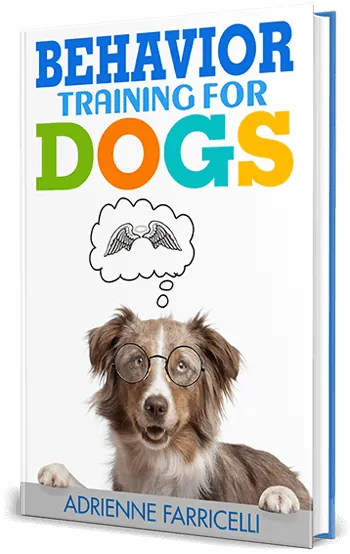
We publish this site independently and stand behind the guidance on it. It is not the official Brain Training for Dogs website, and we are not Adrienne Farricelli or her team. Some links here are affiliate links: if you buy through them we may earn a commission at no extra cost to you, and that never changes what we recommend. See our affiliate disclosure.
Quick answer
Work through five steps: 1) rule out pain (especially for sudden changes), 2) manage the environment so the behaviour cannot keep being rehearsed, 3) meet the dog's needs (exercise, mental stimulation, sleep, security), 4) decide the alternative behaviour you want and reward it heavily, 5) reassess in two weeks and get professional help if there is no progress or any aggression.
Step 1: rule out pain and illness
If the behaviour started suddenly, changed, or the dog seems "off", see your vet before training. Pain, dental problems, gut discomfort, hormonal changes and cognitive decline in older dogs can all drive behaviour that looks like a training issue.
Step 2: manage so it cannot be rehearsed
Every time a dog practises a behaviour and it works, the habit gets stronger. Use baby gates, pens, leads indoors, closed doors, blocked sight lines and tidied-away targets to prevent the behaviour while you train the alternative. Management is not the fix, but it stops the problem getting worse.
Step 3: meet the dog's needs
- Physical exercise appropriate to age, breed and health
- Mental stimulation and enrichment: sniffing, foraging, problem-solving, learning
- Sleep: many "difficult" adolescent and "hyper" dogs are chronically over-tired
- Security and predictability: a safe space, a routine, calm handling
Training a dog whose basic needs are unmet is an uphill battle. Start here.
Step 4: reward the behaviour you want
- Pick a specific alternative: a mat settle, four feet on the floor, a check-in, a hand touch
- Make it easy to get right at first
- Reward every instance generously while it is new
- Gradually raise the difficulty (more distraction, more duration) one step at a time
- Fade the food slowly once the behaviour is fluent, and bring in life rewards
This is the core of positive reinforcement training.
Step 5: reassess in two weeks
Better? Keep going and thin the rewards slowly. No change, or the behaviour involves fear or aggression? Get a qualified, reward-based behaviourist involved, working with your vet.
What not to do
- Punishment-based tools (shock, prong and choke collars, "alpha rolls", startle devices) associated with increased fear and aggression
- Flooding: forcing a scared dog to face what frightens it
- Inconsistency: allowing the behaviour sometimes teaches the dog to keep trying
- Waiting it out: rehearsed problems tend to get more entrenched, not less
Want the games mapped out for you?
Brain Training for Dogs organises reward-based mental exercises and obedience training into difficulty levels, with troubleshooting for each step. Check the current offer for format, contents and guarantee terms.
Affiliate link. We may earn a commission at no additional cost to you.
FAQ
Related guides
- Dog behaviour problems
- Positive reinforcement dog training
- My dog won't listen to me
- Dog impulse control training
- Mental stimulation for dogs
References
- Ziv G (2017). The effects of using aversive training methods in dogs: a review. Journal of Veterinary Behavior 19, 50–60.
- Vieira de Castro AC, Fuchs D, Morello GM, Pastur S, de Sousa L, Olsson IAS (2020). Does training method matter? Evidence for the negative impact of aversive-based methods on companion dog welfare. PLOS ONE 15(12), e0225023.
- China L, Mills DS, Cooper JJ (2020). Efficacy of dog training with and without remote electronic collars vs. a focus on positive reinforcement. Frontiers in Veterinary Science 7, 508.
- China L, Mills DS, Cooper JJ (2023). Reevaluating the effectiveness of electronic shock collars: prevalence of adverse effects and comparison with positive reinforcement. PLOS ONE.
- Herron ME, Shofer FS, Reisner IR (2009). Survey of the use and outcome of confrontational and non-confrontational training methods in client-owned dogs showing undesired behaviors. Applied Animal Behaviour Science 117, 47–54.
- Hiby EF, Rooney NJ, Bradshaw JWS (2004). Dog training methods: their use, effectiveness and interaction with behaviour and welfare. Animal Welfare 13, 63–69.
- Blackwell EJ, Twells C, Seawright A, Casey RA (2008). The relationship between training methods and the occurrence of behavior problems, as reported by owners, in a population of domestic dogs. Journal of Veterinary Behavior 3, 207–217.
- Rooney NJ, Cowan S (2011). Training methods and owner–dog interaction: links with dog behaviour and learning ability. Applied Animal Behaviour Science 132, 169–177.
- Deldalle S, Gaunet F (2014). Effects of 2 training methods on stress-related behaviors of the dog and on the dog–owner relationship. Journal of Veterinary Behavior 9, 58–65.
- Arhant C, Bubna-Littitz H, Bartels A, Futschik A, Troxler J (2010). Behaviour of smaller and larger dogs: effects of training methods, inconsistency of owner behaviour and level of engagement in activities with the dog. Applied Animal Behaviour Science 123, 131–142.
- Fernandes JG, Olsson IAS, Vieira de Castro AC (2017). Do aversive-based training methods actually compromise dog welfare?: a literature review. Applied Animal Behaviour Science 196, 1–12.
- Casey RA, Loftus B, Bolster C, Richards GJ, Blackwell EJ (2014). Human-directed aggression in domestic dogs: occurrence in different contexts and risk factors. Applied Animal Behaviour Science 152, 52–63.
- American Veterinary Society of Animal Behavior (2021). Position Statement on Humane Dog Training. View source
- American Veterinary Society of Animal Behavior. Position Statement on the Use of Punishment for Behavior Modification in Animals. View source
- American Animal Hospital Association (2015). Canine and Feline Behavior Management Guidelines. View source
- WSAVA Animal Wellness and Welfare Committee (2018). Global Welfare Guidelines for companion animal practitioners. Journal of Small Animal Practice.
These references describe dogs and training in general. They are not evidence about any specific commercial program. This page is general information, not a substitute for individualised veterinary or behaviour advice. Last reviewed: 30 August 2026.