
Dog behaviour problems: causes and how to approach the common ones
Most behaviour that owners call a "problem" is a normal dog doing a normal thing at an inconvenient time, or a behaviour that keeps working for the dog. This hub explains how to think about causes, gives a first-response framework, and links to detailed guides for each issue.
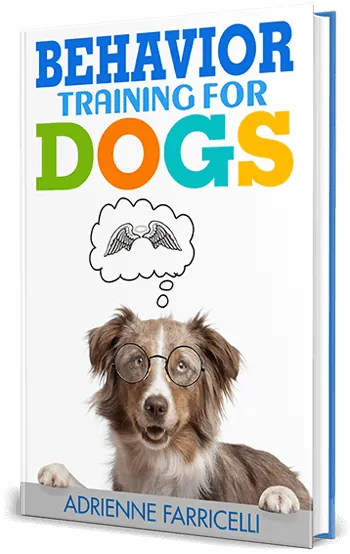
We publish this site independently and stand behind the guidance on it. It is not the official Brain Training for Dogs website, and we are not Adrienne Farricelli or her team. Some links here are affiliate links: if you buy through them we may earn a commission at no extra cost to you, and that never changes what we recommend. See our affiliate disclosure.
Quick answer
For any behaviour problem, work through four questions: Is it medical? (sudden changes especially), What need is unmet? (exercise, enrichment, sleep, security), What is reinforcing it? (attention, access, relief), What do I want instead, and how will I reward that? Manage the environment so the dog can't keep practising the behaviour while you train the alternative. Get professional help for aggression, fear, reactivity, separation panic or anything that appeared abruptly.
How to think about behaviour problems
It is tempting to treat a problem as a personality flaw, "he's stubborn", "she's dominant", "he's spiteful". That framing rarely helps. A more useful model has three parts:
- Antecedent, what happens right before. A knock at the door, a squirrel, being left alone, a lead going on.
- Behaviour, what the dog does.
- Consequence, what the dog gets. Attention, the visitor arrives, the squirrel "leaves", tension is released.
Change the antecedents you can (management), and change the consequences so the behaviour you want pays better than the one you don't. This is the core of positive reinforcement training, and it is the approach endorsed by veterinary behaviour bodies because it is linked with lower stress than punishment-based methods.
The common problems, and where to go next
Barking
Alert, boredom, attention, frustration and fear barking each need a different response.
Chewing & destruction
Normal for young dogs; driven by teething, boredom, or being left alone.
Digging
Instinct, temperature regulation, boredom or scent, often best redirected, not banned.
Jumping up
A greeting behaviour that has been rewarded with attention. Teach an alternative.
Lead pulling
Walking faster than you get the dog where it wants to go. Fixable with consistency.
Not listening
Usually a focus and reinforcement gap around distraction, not defiance.
Whining
Communication with many causes: need, excitement, stress, learned attention-seeking.
Over-excitement
Arousal that outruns self-control. Impulse-control training and calm routines help.
Puppy biting and mouthing
How to stop puppy biting
Normal play and teething behaviour. Redirect, reward a soft mouth, protect sleep.
Biting hands and feet
Moving limbs invite chasing. Trade for a toy and stand still like a tree.
Bite inhibition
Teaching a puppy to control jaw pressure, a safety margin for life.
When do puppies stop biting?
An age timeline, and what makes the phase shorter or longer.
Excited or overtired biting
The evening witching hour is usually a nap cue, not playtime.
Biting children
Management first: supervision, gates, calm rules for kids and adults.
Play or aggression?
How to read the body language and when to get a professional assessment.
Nipping at heels
A herding instinct in collies and heelers. Redirect it, give it a job.
The role of unmet needs
A large share of everyday behaviour problems ease when four basics are covered:
- Physical exercise appropriate to age, breed and health
- Mental stimulation and enrichment, sniffing, foraging, problem-solving, learning (see mental stimulation for dogs)
- Sleep, many adolescent and "hyper" dogs are chronically over-tired; adult dogs need a lot of rest
- Security and predictability, a safe space, a routine, calm handling
None of this replaces training, but training a dog whose needs are unmet is an uphill battle. Start here.
A first-response framework for any problem
| Step | What to do |
|---|---|
| 1. Rule out pain | If it started suddenly or the dog seems "off", see your vet before training. |
| 2. Manage | Prevent rehearsal: baby gates, a pen, leads indoors, tidy away targets, block the view. |
| 3. Meet needs | Exercise, enrichment, sleep, safe space, consistently for two weeks. |
| 4. Decide the alternative | Pick a specific behaviour you want instead (a mat settle, four feet on the floor, a check-in). |
| 5. Reward heavily | Reinforce the alternative every time at first; make it the best-paying option. |
| 6. Reassess in 2 weeks | Better? Keep going and fade rewards slowly. No change? Get professional eyes on it. |
What not to do
- Punishment-based tools, shock, prong and choke collars, "alpha rolls", startle devices. They are associated with increased fear and aggression and can suppress warning signals without changing the underlying emotion.
- Flooding, forcing a scared dog to face what frightens it.
- Inconsistency, allowing the behaviour sometimes teaches the dog to keep trying.
- Waiting it out, problems that are being rehearsed daily tend to get more entrenched, not less.
When to get professional help
Book a vet appointment, and ask for referral to a suitably qualified behaviourist (for example a certified clinical animal behaviourist or a veterinary behaviourist), for any of the following:
- Aggression toward people or animals, growling, snapping, biting, or intense lunging
- Fear or reactivity that isn't improving, or is getting worse
- Distress when left alone, pacing, vocalising, destruction at exits, house-soiling despite being trained
- Repetitive compulsive behaviours, spinning, flank sucking, shadow or light chasing
- Any abrupt change in behaviour or temperament
Seeking help early is not an admission of failure; it is usually what resolves these cases fastest and most humanely.
Where a structured program fits
For the everyday, non-clinical problems, jumping, pulling, mild chewing, poor focus, general unruliness, a reward-based training course can give you a plan and keep you consistent. Brain Training for Dogs includes a behaviour section alongside its games and obedience material, framed around management and reinforcement rather than correction. It is not designed for, and should not be used for, aggression, severe anxiety or reactivity.
A plan for everyday training
Reward-based obedience, games and a common-problems section in one self-paced course. Check the offer for current contents.
Affiliate link. We may earn a commission at no additional cost to you.
FAQ
Related guides
- How to improve dog behaviour
- Positive reinforcement dog training
- Mental stimulation for dogs
- Dog boredom
- My dog won't listen to me
- Dog impulse-control training
- How to stop puppy biting
- Dog separation anxiety
- Stopping an older dog from biting
- Excessive barking in dogs
- Do anti-bark collars work?
References
- Ziv G (2017). The effects of using aversive training methods in dogs: a review. Journal of Veterinary Behavior 19, 50–60.
- Vieira de Castro AC, Fuchs D, Morello GM, Pastur S, de Sousa L, Olsson IAS (2020). Does training method matter? Evidence for the negative impact of aversive-based methods on companion dog welfare. PLOS ONE 15(12), e0225023.
- China L, Mills DS, Cooper JJ (2020). Efficacy of dog training with and without remote electronic collars vs. a focus on positive reinforcement. Frontiers in Veterinary Science 7, 508.
- China L, Mills DS, Cooper JJ (2023). Reevaluating the effectiveness of electronic shock collars: prevalence of adverse effects and comparison with positive reinforcement. PLOS ONE.
- Herron ME, Shofer FS, Reisner IR (2009). Survey of the use and outcome of confrontational and non-confrontational training methods in client-owned dogs showing undesired behaviors. Applied Animal Behaviour Science 117, 47–54.
- Hiby EF, Rooney NJ, Bradshaw JWS (2004). Dog training methods: their use, effectiveness and interaction with behaviour and welfare. Animal Welfare 13, 63–69.
- Blackwell EJ, Twells C, Seawright A, Casey RA (2008). The relationship between training methods and the occurrence of behavior problems, as reported by owners, in a population of domestic dogs. Journal of Veterinary Behavior 3, 207–217.
- Rooney NJ, Cowan S (2011). Training methods and owner–dog interaction: links with dog behaviour and learning ability. Applied Animal Behaviour Science 132, 169–177.
- Deldalle S, Gaunet F (2014). Effects of 2 training methods on stress-related behaviors of the dog and on the dog–owner relationship. Journal of Veterinary Behavior 9, 58–65.
- Arhant C, Bubna-Littitz H, Bartels A, Futschik A, Troxler J (2010). Behaviour of smaller and larger dogs: effects of training methods, inconsistency of owner behaviour and level of engagement in activities with the dog. Applied Animal Behaviour Science 123, 131–142.
- Fernandes JG, Olsson IAS, Vieira de Castro AC (2017). Do aversive-based training methods actually compromise dog welfare?: a literature review. Applied Animal Behaviour Science 196, 1–12.
- Casey RA, Loftus B, Bolster C, Richards GJ, Blackwell EJ (2014). Human-directed aggression in domestic dogs: occurrence in different contexts and risk factors. Applied Animal Behaviour Science 152, 52–63.
- American Veterinary Society of Animal Behavior (2021). Position Statement on Humane Dog Training. View source
- American Veterinary Society of Animal Behavior. Position Statement on the Use of Punishment for Behavior Modification in Animals. View source
- American Animal Hospital Association (2015). Canine and Feline Behavior Management Guidelines. View source
- WSAVA Animal Wellness and Welfare Committee (2018). Global Welfare Guidelines for companion animal practitioners. Journal of Small Animal Practice.
These references describe dogs and training in general. They are not evidence about any specific commercial program. This page is general information, not a substitute for individualised veterinary or behaviour advice. Last reviewed: 30 August 2026.