
Positive reinforcement dog training: how it works and how to do it
Positive reinforcement is the training approach most veterinary behaviour organisations recommend first. This guide explains the mechanics, markers, timing, reward value, schedules, with worked examples, and shows how to fade the food so you are not bribing your dog for life.
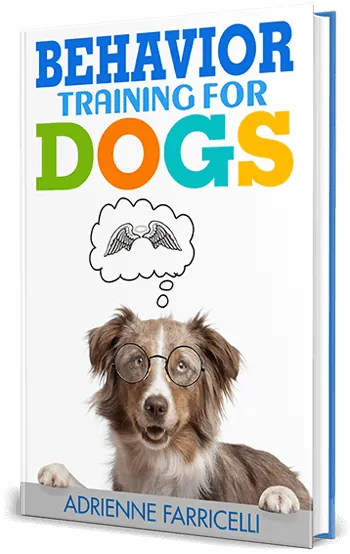
We publish this site independently and stand behind the guidance on it. It is not the official Brain Training for Dogs website, and we are not Adrienne Farricelli or her team. Some links here are affiliate links: if you buy through them we may earn a commission at no extra cost to you, and that never changes what we recommend. See our affiliate disclosure.
Quick answer
Positive reinforcement = add something the dog wants, right after a behaviour, so the behaviour happens more. The workflow is: decide what you want → set up so the dog is likely to do it → mark the instant it happens ("yes" or a click) → reward within a second or two → repeat and gradually raise criteria. Once fluent, reward intermittently and use life rewards. Research links this approach with good results and less stress than punishment-based methods.
The four consequences, briefly
Learning theory describes four ways consequences change behaviour. You only need the first to train well:
- Positive reinforcement, add something good, behaviour increases (treat for a sit).
- Negative reinforcement, remove something unpleasant, behaviour increases (lead pressure released when the dog yields).
- Positive punishment, add something unpleasant, behaviour decreases (a leash correction).
- Negative punishment, remove something good, behaviour decreases (attention withdrawn for jumping).
Modern reward-based training leans almost entirely on positive reinforcement, with a little negative punishment (briefly withholding a reward or your attention). It avoids positive punishment and heavy negative reinforcement because of the fallout described below.
Why the research supports it
Several lines of evidence, all about dogs in general rather than any product:
- Surveys and controlled comparisons associate confrontational and aversive methods with higher rates of fear and aggressive responses during training.
- Studies of electronic-collar vs reward-based training for recall and chasing found reward-based training at least as effective, without the stress indicators.
- Reviews conclude that aversive methods put welfare at risk and offer no efficiency advantage.
- Reward-based training also builds a dog that offers behaviour and engages with training, rather than one that works to avoid correction.
This is why the American Veterinary Society of Animal Behavior and comparable bodies name reward-based training as the standard of care.
The mechanics
1. Markers
A marker is a sound, a clicker or a crisp word like "yes", that means "that exact thing earned a reward". It buys you time to deliver the food and tells the dog precisely which moment paid. Charge it first: click, treat, twenty times, until the dog turns to you at the click.
2. Timing
Mark during the behaviour you want, not after the dog has moved on. Late marking rewards whatever the dog did next. If your timing is off, film a session and watch it back.
3. Reward value and placement
Match the reward to the difficulty. Living-room sit: kibble. Recall away from a squirrel: roast chicken. Place the reward where you want the dog to be, on the mat for a settle, at your side for heel, low on the floor for calm.
4. Raising criteria
Start by rewarding any approximation, then ask for a little more each time (shaping). Change one thing at a time: duration, distance, or distraction, never two at once.
5. Reinforcement schedules
While teaching, reward every correct rep (continuous). Once the behaviour is fluent, switch to rewarding some reps (variable), this actually makes the behaviour more durable. Keep the average rate high early on; thin it slowly.
Worked examples
| Goal | Set-up | Mark when… | Then |
|---|---|---|---|
| Sit | Lure nose up and back, or just wait | Hindquarters touch the floor | Reward at nose height; add the word once reliable |
| Recall | Short distance, low distraction, exciting voice | Dog commits and moves toward you | Jackpot at your legs; never call to end fun abruptly |
| Loose lead | Quiet area, treats at your seam | Lead is slack and dog is near your leg | Feed at the seam; stop moving if the lead tightens |
| Settle on a mat | Mat down, reward calm offered behaviour | Dog lies down / relaxes a hip | Deliver calmly between the paws; extend duration slowly |
Fading the food
- Get fluency first. Don't thin rewards while the behaviour is still shaky.
- Move to variable rewards. Reward roughly every second or third rep, unpredictably, keeping some jackpots.
- Bring in life rewards. A sit opens the door; a check-in earns a sniff; four feet on the floor gets the greeting.
- Keep paying the hard stuff. Recall away from real distractions should stay well rewarded for the dog's life.
Done this way, treats become an occasional top-up, not a permanent bribe. A dog that is lured every time and never has the lure faded is the usual reason people say "he only does it for food".
Common mistakes
- Showing the food before the behaviour (bribing) instead of rewarding after (reinforcing)
- Marker and reward too far apart in time
- Raising difficulty too fast, so the dog fails and disengages
- Repeating a cue the dog hasn't learned yet
- Training when the dog is full, over-aroused or exhausted
- Sessions that run long, keep them to a few minutes
Where it doesn't apply on its own
Fear, reactivity and aggression involve emotion, not just behaviour. Reward-based training is still the foundation, but it is combined with desensitisation and counter-conditioning and, often, veterinary input. Don't try to "obedience your way out" of a fear problem, see dog behaviour problems and speak to a qualified behaviourist.
Where a program fits
Brain Training for Dogs is built on this method: markers, rewards, shaping and gradual criteria, applied through games and obedience exercises. If you want the mechanics above turned into a step-by-step curriculum, that is what it offers. The principles on this page are free to use with or without it.
See the method applied step by step
Reward-based games and obedience training in graded levels. Check the offer for format and current details.
Affiliate link. We may earn a commission at no additional cost to you.
FAQ
Related guides
- What is positive reinforcement dog training
- Positive reinforcement examples
- Dog training rewards
- Dog training without punishment
- Dog focus training
- Obedience training for dogs
- Puppy training basics
References
- Ziv G (2017). The effects of using aversive training methods in dogs: a review. Journal of Veterinary Behavior 19, 50–60.
- Vieira de Castro AC, Fuchs D, Morello GM, Pastur S, de Sousa L, Olsson IAS (2020). Does training method matter? Evidence for the negative impact of aversive-based methods on companion dog welfare. PLOS ONE 15(12), e0225023.
- China L, Mills DS, Cooper JJ (2020). Efficacy of dog training with and without remote electronic collars vs. a focus on positive reinforcement. Frontiers in Veterinary Science 7, 508.
- China L, Mills DS, Cooper JJ (2023). Reevaluating the effectiveness of electronic shock collars: prevalence of adverse effects and comparison with positive reinforcement. PLOS ONE.
- Herron ME, Shofer FS, Reisner IR (2009). Survey of the use and outcome of confrontational and non-confrontational training methods in client-owned dogs showing undesired behaviors. Applied Animal Behaviour Science 117, 47–54.
- Hiby EF, Rooney NJ, Bradshaw JWS (2004). Dog training methods: their use, effectiveness and interaction with behaviour and welfare. Animal Welfare 13, 63–69.
- Blackwell EJ, Twells C, Seawright A, Casey RA (2008). The relationship between training methods and the occurrence of behavior problems, as reported by owners, in a population of domestic dogs. Journal of Veterinary Behavior 3, 207–217.
- Rooney NJ, Cowan S (2011). Training methods and owner–dog interaction: links with dog behaviour and learning ability. Applied Animal Behaviour Science 132, 169–177.
- Deldalle S, Gaunet F (2014). Effects of 2 training methods on stress-related behaviors of the dog and on the dog–owner relationship. Journal of Veterinary Behavior 9, 58–65.
- Arhant C, Bubna-Littitz H, Bartels A, Futschik A, Troxler J (2010). Behaviour of smaller and larger dogs: effects of training methods, inconsistency of owner behaviour and level of engagement in activities with the dog. Applied Animal Behaviour Science 123, 131–142.
- Fernandes JG, Olsson IAS, Vieira de Castro AC (2017). Do aversive-based training methods actually compromise dog welfare?: a literature review. Applied Animal Behaviour Science 196, 1–12.
- Casey RA, Loftus B, Bolster C, Richards GJ, Blackwell EJ (2014). Human-directed aggression in domestic dogs: occurrence in different contexts and risk factors. Applied Animal Behaviour Science 152, 52–63.
- American Veterinary Society of Animal Behavior (2021). Position Statement on Humane Dog Training. View source
- American Veterinary Society of Animal Behavior. Position Statement on the Use of Punishment for Behavior Modification in Animals. View source
- American Animal Hospital Association (2015). Canine and Feline Behavior Management Guidelines. View source
- WSAVA Animal Wellness and Welfare Committee (2018). Global Welfare Guidelines for companion animal practitioners. Journal of Small Animal Practice.
These references describe dogs and training in general. They are not evidence about any specific commercial program. This page is general information, not a substitute for individualised veterinary or behaviour advice. Last reviewed: 30 August 2026.