
Obedience training for dogs
Obedience is not about a dog obeying out of pressure. It is a set of useful cues, taught with rewards, that make daily life with a dog easier and safer.
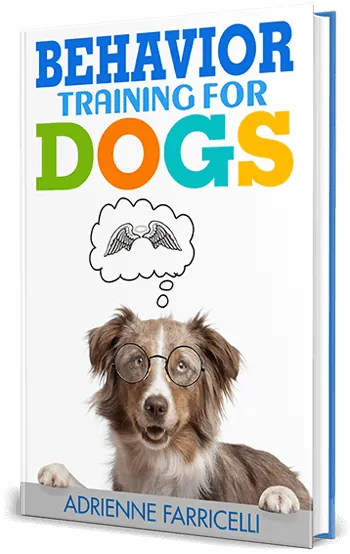
We publish this site independently and stand behind the guidance on it. It is not the official Brain Training for Dogs website, and we are not Adrienne Farricelli or her team. Some links here are affiliate links: if you buy through them we may earn a commission at no extra cost to you, and that never changes what we recommend. See our affiliate disclosure.
Quick answer
Teach the core cues with a marker and small rewards, one focus per short session: attention (the foundation), then sit, down, stay, recall, leave it and loose-lead walking. Train little and often (two 5-minute sessions a day), start where the dog succeeds, and add distraction gradually.
Start with attention
Before any cue, teach the dog that checking in with you pays. Mark and reward every voluntary glance at your face, at home first, then in gradually busier places. Recall, loose-lead walking and settling all sit on top of this.
The core cues
Sit
Lure the nose up and slightly back, or simply wait; the moment the hindquarters touch the floor, mark and reward at nose height. Add the word once the dog is reliably offering the sit.
Down
From a sit, lure the nose down between the front paws and forward along the floor. Mark as the elbows touch down. Reward on the floor between the paws so the dog stays down.
Stay
Reward the dog for staying in position for one second, then two, then three. Add distance and duration separately, never both at once. Return to the dog to reward at first rather than calling it out of the stay.
Recall
Start at a short distance in a low-distraction place with an exciting voice. Reward heavily when the dog arrives: jackpot at your legs. Never call the dog to end something fun abruptly, and never punish a slow recall.
Leave it
Closed fist with food; reward from the other hand when the dog backs off. Progress to food on the floor under your hand, then uncovered, then to real-life items on walks.
Loose-lead walking
A loose lead means you move and feed at your trouser seam; a tight lead means you stop. Reward position beside your leg. See how to stop dog pulling on the leash for the full method.
A training schedule
- Daily: two 5-minute sessions; a wait at doors and meals; reward check-ins on walks
- Weekly: take one cue to a slightly harder environment; add one new trick for variety
Common mistakes
- Repeating cues instead of helping the dog succeed
- Adding distraction before the cue is solid in easy conditions
- Long sessions: keep them short and end on a win
- Punishing a slow or reluctant response: it teaches the dog not to respond at all
- Never fading the lure, so the dog only works with food visible
Group classes
A good reward-based class adds proofing around distraction and, for suitable dogs, socialisation. Look for a trainer who uses markers and rewards, holds a recognised credential, and is happy for you to watch a class first.
Want the games mapped out for you?
Brain Training for Dogs organises reward-based mental exercises and obedience training into difficulty levels, with troubleshooting for each step. Check the current offer for format, contents and guarantee terms.
Affiliate link. We may earn a commission at no additional cost to you.
FAQ
Related guides
- Positive reinforcement dog training
- Dog focus training
- How to get a dog to listen
- Dog training rewards
- My dog won't listen to me
References
- Ziv G (2017). The effects of using aversive training methods in dogs: a review. Journal of Veterinary Behavior 19, 50–60.
- Vieira de Castro AC, Fuchs D, Morello GM, Pastur S, de Sousa L, Olsson IAS (2020). Does training method matter? Evidence for the negative impact of aversive-based methods on companion dog welfare. PLOS ONE 15(12), e0225023.
- China L, Mills DS, Cooper JJ (2020). Efficacy of dog training with and without remote electronic collars vs. a focus on positive reinforcement. Frontiers in Veterinary Science 7, 508.
- China L, Mills DS, Cooper JJ (2023). Reevaluating the effectiveness of electronic shock collars: prevalence of adverse effects and comparison with positive reinforcement. PLOS ONE.
- Herron ME, Shofer FS, Reisner IR (2009). Survey of the use and outcome of confrontational and non-confrontational training methods in client-owned dogs showing undesired behaviors. Applied Animal Behaviour Science 117, 47–54.
- Hiby EF, Rooney NJ, Bradshaw JWS (2004). Dog training methods: their use, effectiveness and interaction with behaviour and welfare. Animal Welfare 13, 63–69.
- Blackwell EJ, Twells C, Seawright A, Casey RA (2008). The relationship between training methods and the occurrence of behavior problems, as reported by owners, in a population of domestic dogs. Journal of Veterinary Behavior 3, 207–217.
- Rooney NJ, Cowan S (2011). Training methods and owner–dog interaction: links with dog behaviour and learning ability. Applied Animal Behaviour Science 132, 169–177.
- Deldalle S, Gaunet F (2014). Effects of 2 training methods on stress-related behaviors of the dog and on the dog–owner relationship. Journal of Veterinary Behavior 9, 58–65.
- Arhant C, Bubna-Littitz H, Bartels A, Futschik A, Troxler J (2010). Behaviour of smaller and larger dogs: effects of training methods, inconsistency of owner behaviour and level of engagement in activities with the dog. Applied Animal Behaviour Science 123, 131–142.
- Fernandes JG, Olsson IAS, Vieira de Castro AC (2017). Do aversive-based training methods actually compromise dog welfare?: a literature review. Applied Animal Behaviour Science 196, 1–12.
- Casey RA, Loftus B, Bolster C, Richards GJ, Blackwell EJ (2014). Human-directed aggression in domestic dogs: occurrence in different contexts and risk factors. Applied Animal Behaviour Science 152, 52–63.
- American Veterinary Society of Animal Behavior (2021). Position Statement on Humane Dog Training. View source
- American Veterinary Society of Animal Behavior. Position Statement on the Use of Punishment for Behavior Modification in Animals. View source
- American Animal Hospital Association (2015). Canine and Feline Behavior Management Guidelines. View source
- WSAVA Animal Wellness and Welfare Committee (2018). Global Welfare Guidelines for companion animal practitioners. Journal of Small Animal Practice.
These references describe dogs and training in general. They are not evidence about any specific commercial program. This page is general information, not a substitute for individualised veterinary or behaviour advice. Last reviewed: 30 August 2026.