
Dog training without punishment
You can train a well-mannered dog without pain, fear or intimidation. It relies on preventing rehearsal, rewarding the behaviour you want, and briefly withholding rewards for the behaviour you do not.
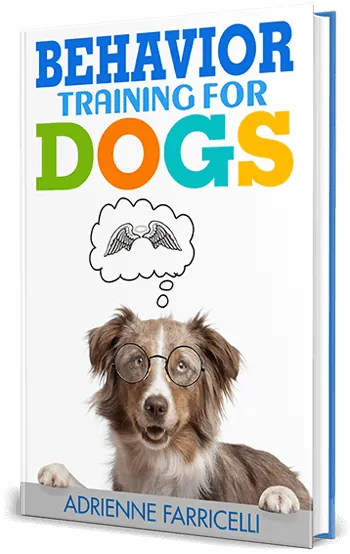
We publish this site independently and stand behind the guidance on it. It is not the official Brain Training for Dogs website, and we are not Adrienne Farricelli or her team. Some links here are affiliate links: if you buy through them we may earn a commission at no extra cost to you, and that never changes what we recommend. See our affiliate disclosure.
Quick answer
Punishment-free training uses three tools: management (arrange the environment so the dog cannot practise the unwanted behaviour), positive reinforcement (reward a specific alternative heavily), and negative punishment (briefly withhold attention or a reward for the unwanted behaviour). It avoids positive punishment (shock, prong and choke collars, leash pops, startle) which research links with increased fear and aggression.
Why avoid aversive methods
- Surveys and studies associate confrontational and aversive training with higher rates of fear and aggressive responses
- Aversive tools can suppress warning signals (a growl) without changing the underlying emotion, which can lead to bites "without warning"
- Reviews find no efficiency advantage over reward-based training
- Major veterinary behaviour organisations advise against them
The three tools you use instead
1. Management
Prevent the behaviour while you train the alternative: gates, pens, leads indoors, closed doors, tidied-away targets, blocked sight lines. Every prevented rehearsal is progress.
2. Positive reinforcement
Decide the behaviour you want instead (a mat settle, four feet on the floor, a check-in) and reward it every time while it is new. Make it the best-paying option.
3. Negative punishment (withholding rewards)
For behaviours maintained by attention or access, briefly remove the reward: turn away when the dog jumps, stop walking when the lead tightens, end the game if teeth touch skin. This is not painful or scary; it just makes the unwanted behaviour stop working.
Worked example: jumping up
- Manage: dog on a lead or behind a gate for greetings so it cannot rehearse the jump
- Reward: the instant four feet are on the floor or the dog sits, calm attention and a treat
- Withhold: the moment paws leave the floor, everyone turns away and gives zero attention
- Repeat consistently; most dogs work out the pattern within several greetings
Does it work for serious problems?
For fear, reactivity and aggression, reward-based training is the foundation, combined with desensitisation and counter-conditioning and, usually, veterinary input. Aversive methods in these cases tend to make the emotion worse. Work with a qualified, reward-based behaviourist.
Is a firm "no" punishment?
An interrupter word to redirect a dog is fine if it is not frightening and you follow it by helping the dog do something else you can reward. The line is intimidation and pain: those are what punishment-free training avoids.
Want the games mapped out for you?
Brain Training for Dogs organises reward-based mental exercises and obedience training into difficulty levels, with troubleshooting for each step. Check the current offer for format, contents and guarantee terms.
Affiliate link. We may earn a commission at no additional cost to you.
FAQ
Related guides
- Positive reinforcement dog training
- What is positive reinforcement dog training
- Dog training rewards
- How to improve dog behaviour
- Dog behaviour problems
References
- Ziv G (2017). The effects of using aversive training methods in dogs: a review. Journal of Veterinary Behavior 19, 50–60.
- Vieira de Castro AC, Fuchs D, Morello GM, Pastur S, de Sousa L, Olsson IAS (2020). Does training method matter? Evidence for the negative impact of aversive-based methods on companion dog welfare. PLOS ONE 15(12), e0225023.
- China L, Mills DS, Cooper JJ (2020). Efficacy of dog training with and without remote electronic collars vs. a focus on positive reinforcement. Frontiers in Veterinary Science 7, 508.
- China L, Mills DS, Cooper JJ (2023). Reevaluating the effectiveness of electronic shock collars: prevalence of adverse effects and comparison with positive reinforcement. PLOS ONE.
- Herron ME, Shofer FS, Reisner IR (2009). Survey of the use and outcome of confrontational and non-confrontational training methods in client-owned dogs showing undesired behaviors. Applied Animal Behaviour Science 117, 47–54.
- Hiby EF, Rooney NJ, Bradshaw JWS (2004). Dog training methods: their use, effectiveness and interaction with behaviour and welfare. Animal Welfare 13, 63–69.
- Blackwell EJ, Twells C, Seawright A, Casey RA (2008). The relationship between training methods and the occurrence of behavior problems, as reported by owners, in a population of domestic dogs. Journal of Veterinary Behavior 3, 207–217.
- Rooney NJ, Cowan S (2011). Training methods and owner–dog interaction: links with dog behaviour and learning ability. Applied Animal Behaviour Science 132, 169–177.
- Deldalle S, Gaunet F (2014). Effects of 2 training methods on stress-related behaviors of the dog and on the dog–owner relationship. Journal of Veterinary Behavior 9, 58–65.
- Arhant C, Bubna-Littitz H, Bartels A, Futschik A, Troxler J (2010). Behaviour of smaller and larger dogs: effects of training methods, inconsistency of owner behaviour and level of engagement in activities with the dog. Applied Animal Behaviour Science 123, 131–142.
- Fernandes JG, Olsson IAS, Vieira de Castro AC (2017). Do aversive-based training methods actually compromise dog welfare?: a literature review. Applied Animal Behaviour Science 196, 1–12.
- Casey RA, Loftus B, Bolster C, Richards GJ, Blackwell EJ (2014). Human-directed aggression in domestic dogs: occurrence in different contexts and risk factors. Applied Animal Behaviour Science 152, 52–63.
- American Veterinary Society of Animal Behavior (2021). Position Statement on Humane Dog Training. View source
- American Veterinary Society of Animal Behavior. Position Statement on the Use of Punishment for Behavior Modification in Animals. View source
- American Animal Hospital Association (2015). Canine and Feline Behavior Management Guidelines. View source
- WSAVA Animal Wellness and Welfare Committee (2018). Global Welfare Guidelines for companion animal practitioners. Journal of Small Animal Practice.
These references describe dogs and training in general. They are not evidence about any specific commercial program. This page is general information, not a substitute for individualised veterinary or behaviour advice. Last reviewed: 30 August 2026.