
How to stop a dog jumping up on people
Jumping up is friendly, not dominant. The dog wants to get to your face, and every greeting where it worked taught it to keep trying. The fix is to make "four feet on the floor" the thing that earns attention, and to stop the jump from being rehearsed in the meantime.
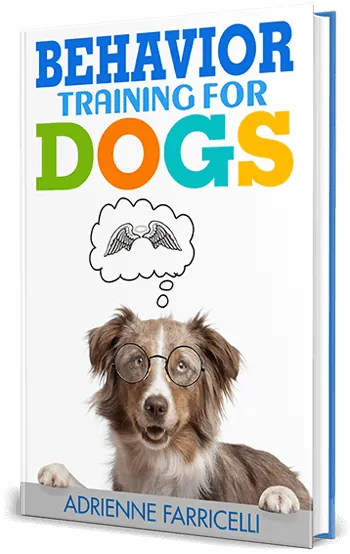
We publish this site independently and stand behind the guidance on it. It is not the official Brain Training for Dogs website, and we are not Adrienne Farricelli or her team. Some links here are affiliate links: if you buy through them we may earn a commission at no extra cost to you, and that never changes what we recommend. See our affiliate disclosure.
Quick answer
Manage greetings with a lead, gate or mat so the dog can't reach people to jump. Remove the reward: everyone turns away and gives zero attention while the dog is jumping. Reward the alternative: the instant four feet are on the floor (or the dog sits), calm attention and a treat. Be consistent: one person letting the dog jump keeps the habit alive. Never knee, push or step on the dog.
Why dogs jump up
Puppies greet adult dogs and people by reaching for the face. We often reward it when they're small and cute, with cuddles, laughter and "hello!", then object once they're big enough to knock someone over. To the dog, nothing changed except our reaction, which is now inconsistent. Excitement and arousal make it worse: a dog that's over-aroused at the door has little self-control to spare.
The plan
1. Manage so the jump can't happen
- Keep a lead on for greetings, or use a baby gate or pen between the dog and the door.
- Teach a station: a mat or bed near the door that the dog goes to when the bell rings, built up separately and rewarded heavily.
- For the first few weeks, prevent every unmanaged greeting. Rehearsal is what maintains the behaviour.
2. Remove the reward for jumping
- The moment paws leave the floor: turn away, fold arms, no eye contact, no words. Become boring.
- As soon as feet are down, turn back and reward calmly.
- If the dog jumps again, repeat. Most dogs work out the pattern within several greetings.
- Brief the household and visitors, hand guests a treat pot and the one instruction: "ignore until the feet are down, then say hi."
3. Reward an incompatible behaviour
- Teach a solid sit, then a "sit to say hello": reward the dog for sitting as a person approaches.
- Or reward "four on the floor", scatter treats on the ground on approach so the dog's nose is down.
- Practise with easy people first (calm adults) before hard ones (excitable children, people who love letting dogs jump).
4. Lower the arousal
Keep greetings low-key, quiet voice, slow movement. Give the dog an outlet before predictable high-excitement moments (a chew when guests are due, a walk before the school run). A dog with enough mental stimulation and impulse-control practice has more self-control at the door.
Specific situations
| Situation | Adjustment |
|---|---|
| Jumping on you at the door home from work | Ignore completely on entry; greet only after the dog settles. Keep it boring. |
| Jumping on guests | Dog on lead or behind a gate; guests coached before entry; reward station. |
| Jumping on children | Always manage, lead or separation. Kids can't deliver consistent criteria. Reward the dog for calm around them. |
| Jumping on people on walks | Step on the lead to limit height, reward attention on you, ask strangers not to greet until the dog sits. |
| Jumping when you sit down | Reward settling on a mat beside you; ignore the jump-up onto your lap unless invited. |
Mistakes to avoid
- Kneeing, toe-stepping, leash-popping, can hurt or frighten, make greetings stressful, and the attention still rewards the jump.
- Shouting "off", loud attention is still attention for an excited dog.
- Only some people enforcing it, intermittent reward makes the behaviour more persistent.
- Training only in calm moments, you have to practise at real greetings, just managed ones.
- Rewarding the sit too late, if you wait, you may reward the jump that comes next.
When to get help
Jumping combined with mouthing, snapping, or an inability to settle at all may signal over-arousal that needs a structured plan, or occasionally an underlying anxiety, worth a chat with a qualified reward-based trainer or behaviourist. A vet check is sensible if a previously calm adult dog suddenly becomes frantic at greetings.
Where a program fits
Jumping is a textbook "teach an alternative and be consistent" problem, and a structured course keeps the whole household on the same page. Brain Training for Dogs covers polite greetings and impulse control in its games and behaviour sections using this reward-based approach.
Get the whole household consistent
Reward-based greeting, sit and settle training, plus impulse-control games. See the current offer.
Affiliate link. We may earn a commission at no additional cost to you.
FAQ
Related guides
- Dog impulse-control training
- Puppy biting children
- How to calm an overexcited dog
- Dog behaviour problems
- Positive reinforcement dog training
- Dog focus training
References
- Ziv G (2017). The effects of using aversive training methods in dogs: a review. Journal of Veterinary Behavior 19, 50–60.
- Vieira de Castro AC, Fuchs D, Morello GM, Pastur S, de Sousa L, Olsson IAS (2020). Does training method matter? Evidence for the negative impact of aversive-based methods on companion dog welfare. PLOS ONE 15(12), e0225023.
- China L, Mills DS, Cooper JJ (2020). Efficacy of dog training with and without remote electronic collars vs. a focus on positive reinforcement. Frontiers in Veterinary Science 7, 508.
- China L, Mills DS, Cooper JJ (2023). Reevaluating the effectiveness of electronic shock collars: prevalence of adverse effects and comparison with positive reinforcement. PLOS ONE.
- Herron ME, Shofer FS, Reisner IR (2009). Survey of the use and outcome of confrontational and non-confrontational training methods in client-owned dogs showing undesired behaviors. Applied Animal Behaviour Science 117, 47–54.
- Hiby EF, Rooney NJ, Bradshaw JWS (2004). Dog training methods: their use, effectiveness and interaction with behaviour and welfare. Animal Welfare 13, 63–69.
- Blackwell EJ, Twells C, Seawright A, Casey RA (2008). The relationship between training methods and the occurrence of behavior problems, as reported by owners, in a population of domestic dogs. Journal of Veterinary Behavior 3, 207–217.
- Rooney NJ, Cowan S (2011). Training methods and owner–dog interaction: links with dog behaviour and learning ability. Applied Animal Behaviour Science 132, 169–177.
- Deldalle S, Gaunet F (2014). Effects of 2 training methods on stress-related behaviors of the dog and on the dog–owner relationship. Journal of Veterinary Behavior 9, 58–65.
- Arhant C, Bubna-Littitz H, Bartels A, Futschik A, Troxler J (2010). Behaviour of smaller and larger dogs: effects of training methods, inconsistency of owner behaviour and level of engagement in activities with the dog. Applied Animal Behaviour Science 123, 131–142.
- Fernandes JG, Olsson IAS, Vieira de Castro AC (2017). Do aversive-based training methods actually compromise dog welfare?: a literature review. Applied Animal Behaviour Science 196, 1–12.
- Casey RA, Loftus B, Bolster C, Richards GJ, Blackwell EJ (2014). Human-directed aggression in domestic dogs: occurrence in different contexts and risk factors. Applied Animal Behaviour Science 152, 52–63.
- American Veterinary Society of Animal Behavior (2021). Position Statement on Humane Dog Training. View source
- American Veterinary Society of Animal Behavior. Position Statement on the Use of Punishment for Behavior Modification in Animals. View source
- American Animal Hospital Association (2015). Canine and Feline Behavior Management Guidelines. View source
- WSAVA Animal Wellness and Welfare Committee (2018). Global Welfare Guidelines for companion animal practitioners. Journal of Small Animal Practice.
These references describe dogs and training in general. They are not evidence about any specific commercial program. This page is general information, not a substitute for individualised veterinary or behaviour advice. Last reviewed: 30 August 2026.