
How to calm an overexcited dog
An overexcited dog is not being naughty; it is flooded with arousal and has little self-control left to spend. You calm it by lowering the intensity and rebuilding the off-switch.
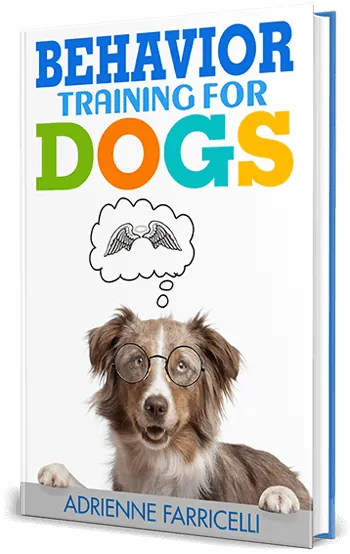
We publish this site independently and stand behind the guidance on it. It is not the official Brain Training for Dogs website, and we are not Adrienne Farricelli or her team. Some links here are affiliate links: if you buy through them we may earn a commission at no extra cost to you, and that never changes what we recommend. See our affiliate disclosure.
Quick answer
In the moment: reduce the input (more distance, less noise, slower movement), give the dog space and time to come down, and avoid adding excitement by shouting. Longer term: teach impulse control and a mat settle, keep greetings and play low-key, add enforced rest, and give an outlet before predictable high-excitement moments.
Why it happens
Excitement is arousal, and arousal is physical: adrenaline up, heart rate up, thinking brain offline. Some dogs tip over quickly: at the door, on walks, when another dog appears, at the start of play. Adolescents, working breeds and under-rested dogs are most prone. Once a dog is over its threshold, no cue will land, because it cannot access trained behaviour.
In the moment
- Add distance from whatever is winding the dog up
- Lower your energy: quiet voice, slow movements, no wrestling or high-pitched talk
- Wait it out: give the dog 30–60 seconds of calm before asking for anything
- Scatter a few treats on the floor so the dog sniffs, which is naturally settling
- Do not punish: it adds arousal and can make the dog more reactive
Longer-term training
- Impulse control: daily waits at bowls and doors, "leave it", the "it is your choice" game, see dog impulse-control training
- Mat settle: reward calm on a mat while life happens, building duration; this becomes a portable off-switch
- Calm greetings and play: keep them low-key; end play on a settle, not at peak intensity
- Sniff-led walks instead of fast, repetitive chase games that spike arousal
Protect rest
Many "overexcited" dogs are over-tired. Adult dogs need a lot of sleep, and adolescents benefit from enforced naps in a quiet, covered space after activity. A rested dog has more self-control to spend.
Pre-empt the spikes
Give a chew before guests arrive, walk before the school run, and use a stationing routine (go to the mat when the doorbell rings) so the dog has a job at the moment it would otherwise lose control.
When to get help
If over-excitement comes with mouthing that hurts, an inability to settle at all, or reactivity toward dogs or people, work with a qualified, reward-based trainer or behaviourist. A vet check is sensible if a previously calm adult dog suddenly becomes frantic.
Want the games mapped out for you?
Brain Training for Dogs organises reward-based mental exercises and obedience training into difficulty levels, with troubleshooting for each step. Check the current offer for format, contents and guarantee terms.
Affiliate link. We may earn a commission at no additional cost to you.
FAQ
Related guides
- Dog impulse control training
- Impulse control games for dogs
- How to calm a hyper dog
- How to stop a dog jumping on people
- Dog behaviour problems
References
- Wells DL (2004). A review of environmental enrichment for kennelled dogs, Canis familiaris. Applied Animal Behaviour Science 85, 307–317.
- Kis A, Szakadát S, Gácsi M, et al. (2017). The interrelated effect of sleep and learning in dogs (Canis familiaris): an EEG and behavioural study. Scientific Reports 7, 41873.
- Duranton C, Horowitz A (2019). Let me sniff! Nosework induces positive judgment bias in pet dogs. Applied Animal Behaviour Science 211, 61–66.
- Bray EE, Sammel MD, Cheney DL, Serpell JA, Seyfarth RM (2017). Effects of maternal investment, temperament, and cognition on guide dog success. PNAS 114(34), 9128–9133.
- Milgram NW, Head E, Zicker SC, et al. (2005). Learning ability in aged beagle dogs is preserved by behavioral enrichment and dietary fortification: a two-year longitudinal study. Neurobiology of Aging 26(1), 77–90.
- Riemer S, Heritier C, Windschnurer I, Pratsch L, Arhant C, Affenzeller N (2021). A review on mitigating fear and aggression in dogs and cats in a veterinary setting. Animals 11(1), 158.
- Sundman AS, Van Poucke E, Svensson Holm AC, et al. (2019). Long-term stress levels are synchronized in dogs and their owners. Scientific Reports 9, 7391.
- American Animal Hospital Association (2015). Canine and Feline Behavior Management Guidelines. View source
- American Veterinary Society of Animal Behavior (2021). Position Statement on Humane Dog Training. View source
These references describe dogs and training in general. They are not evidence about any specific commercial program. This page is general information, not a substitute for individualised veterinary or behaviour advice. Last reviewed: 30 August 2026.