
How to train a 'stubborn' dog
'Stubborn' is rarely the real problem. It usually means the behaviour is not trained to that difficulty yet, the reward is not worth it, or the dog is too aroused to think.
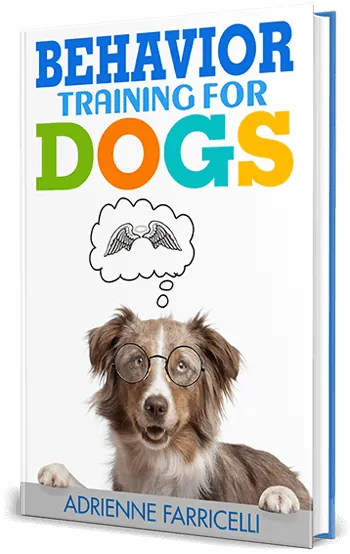
We publish this site independently and stand behind the guidance on it. It is not the official Brain Training for Dogs website, and we are not Adrienne Farricelli or her team. Some links here are affiliate links: if you buy through them we may earn a commission at no extra cost to you, and that never changes what we recommend. See our affiliate disclosure.
Quick answer
Treat 'stubborn' as a diagnosis to unpack, not a trait. Check: is the behaviour actually trained in this situation? Is the reward worth it right now? Is the dog over threshold (excited, stressed, distracted)? Is the cue clear, or has it become noise? Fix whichever applies with easier steps, better rewards and one clear cue.
What 'stubborn' usually means
| Looks like | Actually is | Fix |
|---|---|---|
| "He knows it, he just won't do it" | The cue was trained at home, not in this situation | Re-teach it in gradually harder settings |
| "She only does it for food" | The lure was never faded; or the reward is too low for the distraction | Fade the lure; raise reward value for hard asks |
| "He ignores me outside" | The dog is over threshold and cannot access trained behaviour | Add distance from the distraction; make it easier |
| "She's just being difficult" | The cue has been repeated so often it is background noise | Pick a fresh cue; say it once; help the dog succeed |
| "He's slow and reluctant" | Possible pain or discomfort | Vet check |
Breeds that get called stubborn
Hounds, terriers, huskies, and independent working breeds are often labelled stubborn. They are usually just less biddable and more easily distracted by scent or movement. They train well with higher-value rewards, shorter sessions, and management (a long line) so they cannot self-reward by ignoring you.
A better approach
- Lower the bar. Go back to a version of the behaviour the dog nails every time.
- Raise the pay. Use something the dog rarely gets, especially around distraction.
- Shorten the session. Three to five minutes, ending on a win.
- One clean cue. Say it once; if nothing happens, help, then reward.
- Build difficulty gradually. One of distance, duration or distraction at a time.
- Manage the environment so ignoring you is not an option while the behaviour is still shaky.
What not to do
Escalating pressure (a harder voice, a lead pop, physical prompting) raises arousal and makes the dog less able to think, not more compliant. Aversive tools are linked with more fear and aggression and no better results than reward-based training.
Want the games mapped out for you?
Brain Training for Dogs organises reward-based mental exercises and obedience training into difficulty levels, with troubleshooting for each step. Check the current offer for format, contents and guarantee terms.
Affiliate link. We may earn a commission at no additional cost to you.
FAQ
Related guides
- My dog won't listen to me
- How to get a dog to listen
- Positive reinforcement dog training
- Dog focus training
- Dog training rewards
References
- Ziv G (2017). The effects of using aversive training methods in dogs: a review. Journal of Veterinary Behavior 19, 50–60.
- Vieira de Castro AC, Fuchs D, Morello GM, Pastur S, de Sousa L, Olsson IAS (2020). Does training method matter? Evidence for the negative impact of aversive-based methods on companion dog welfare. PLOS ONE 15(12), e0225023.
- China L, Mills DS, Cooper JJ (2020). Efficacy of dog training with and without remote electronic collars vs. a focus on positive reinforcement. Frontiers in Veterinary Science 7, 508.
- China L, Mills DS, Cooper JJ (2023). Reevaluating the effectiveness of electronic shock collars: prevalence of adverse effects and comparison with positive reinforcement. PLOS ONE.
- Herron ME, Shofer FS, Reisner IR (2009). Survey of the use and outcome of confrontational and non-confrontational training methods in client-owned dogs showing undesired behaviors. Applied Animal Behaviour Science 117, 47–54.
- Hiby EF, Rooney NJ, Bradshaw JWS (2004). Dog training methods: their use, effectiveness and interaction with behaviour and welfare. Animal Welfare 13, 63–69.
- Blackwell EJ, Twells C, Seawright A, Casey RA (2008). The relationship between training methods and the occurrence of behavior problems, as reported by owners, in a population of domestic dogs. Journal of Veterinary Behavior 3, 207–217.
- Rooney NJ, Cowan S (2011). Training methods and owner–dog interaction: links with dog behaviour and learning ability. Applied Animal Behaviour Science 132, 169–177.
- Deldalle S, Gaunet F (2014). Effects of 2 training methods on stress-related behaviors of the dog and on the dog–owner relationship. Journal of Veterinary Behavior 9, 58–65.
- Arhant C, Bubna-Littitz H, Bartels A, Futschik A, Troxler J (2010). Behaviour of smaller and larger dogs: effects of training methods, inconsistency of owner behaviour and level of engagement in activities with the dog. Applied Animal Behaviour Science 123, 131–142.
- Fernandes JG, Olsson IAS, Vieira de Castro AC (2017). Do aversive-based training methods actually compromise dog welfare?: a literature review. Applied Animal Behaviour Science 196, 1–12.
- Casey RA, Loftus B, Bolster C, Richards GJ, Blackwell EJ (2014). Human-directed aggression in domestic dogs: occurrence in different contexts and risk factors. Applied Animal Behaviour Science 152, 52–63.
- American Veterinary Society of Animal Behavior (2021). Position Statement on Humane Dog Training. View source
- American Veterinary Society of Animal Behavior. Position Statement on the Use of Punishment for Behavior Modification in Animals. View source
- American Animal Hospital Association (2015). Canine and Feline Behavior Management Guidelines. View source
- WSAVA Animal Wellness and Welfare Committee (2018). Global Welfare Guidelines for companion animal practitioners. Journal of Small Animal Practice.
These references describe dogs and training in general. They are not evidence about any specific commercial program. This page is general information, not a substitute for individualised veterinary or behaviour advice. Last reviewed: 30 August 2026.